Как длина бурильной штанги влияет на устойчивость бурения горных пород, качество скважины и производительность.
Drill Rod Length and Equipment Matching: How to Prevent Hole Deviation and Drill Rod Jamming
In underground mining and tunneling, drill rods are often treated as simple power-transfer components. That view is incomplete. The length of a drill rod directly affects drilling stability, hole accuracy, equipment vibration, operating safety, and overall productivity. Many problems that appear to be caused by the rock formation or the drilling machine actually originate from a mismatch between the drill rod, the equipment, and the working conditions.
Selecting the longest available rod does not automatically improve drilling performance. The correct choice is the rod that matches the roadway dimensions, hole design, drilling cycle, feed system, and rig structure.
Why Drill Rod Length Matters
As drill rod length increases, the rod is exposed to greater impact loads, rotary torque, and reverse forces during drilling. Longer rods are more sensitive to bending and vibration, especially when the hole is not perfectly aligned or when the rock mass contains hard inclusions and fractured zones.
A longer rod also places greater demands on the drilling rig. The feed beam must provide adequate support, the boom must maintain sufficient rigidity, and the propulsion system must deliver stable force throughout the drilling stroke. If the rod length exceeds what the machine can control effectively, vibration increases and drilling accuracy begins to deteriorate.
This can lead to:
Hole deviation and poor blast-hole accuracy
Abnormal equipment noise and vibration
Accelerated rod and thread wear
Higher risk of rod jamming
Lower drilling penetration rates
Increased downtime and maintenance costs
For this reason, drilling performance should be evaluated as a complete system rather than by looking only at machine power or rod length.
The Risks of Poor Parameter Matching
When drill rod length is not properly matched to the equipment and the jobsite, several problems may develop at the same time.
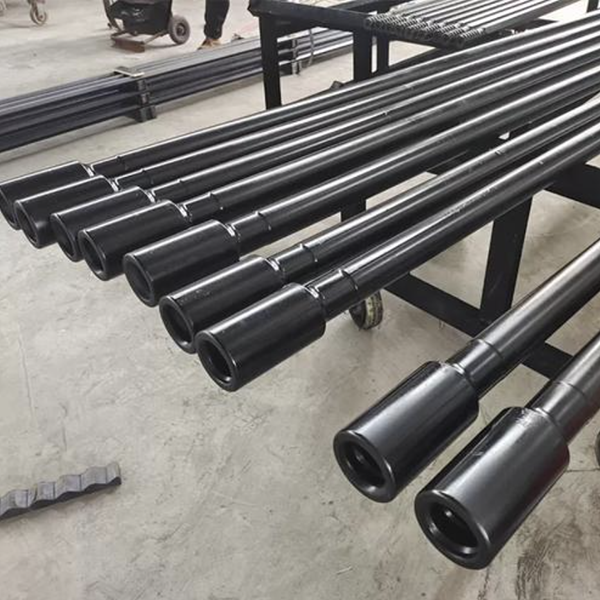
A rod that is too long for the feed system may experience excessive bending. This reduces hole straightness and can create uneven contact between the rod and the hole wall. The resulting friction increases energy loss and may accelerate wear on the rod, coupling components, and drill bit.
Poor matching can also increase the probability of jamming. When the rod is exposed to unstable lateral forces, fractured rock, or excessive feed pressure, the drilling system may lose alignment. In underground work, this can quickly develop into a stuck rod, delayed blast preparation, or unplanned equipment maintenance.
A reliable drilling operation therefore depends on coordination between the rock drill, feed system, boom structure, rod, shank adapter, bit, and operating parameters. Increasing the power of one component cannot compensate for poor compatibility across the entire drilling system.
Built-In Protection for Hard-Rock Conditions
Modern underground drilling equipment increasingly includes protective functions designed to reduce the consequences of abnormal drilling conditions.
Anti-jamming protection can detect changes in drilling resistance and help prevent the rod from becoming locked in the hole. Automatic drill stopping can reduce damage when the system detects an abnormal condition. Oil-level and oil-temperature alarms provide additional protection for hydraulic and mechanical components during long operating cycles.
These functions are particularly useful in complex hard-rock environments where drilling conditions can change rapidly. They do not replace correct equipment selection, but they can reduce the severity of operating errors, limit equipment damage, and shorten downtime caused by rod jamming, hole deviation, or abnormal vibration.
Three Dimensions for Correct Drill Rod Selection
1. Evaluate the Roadway and Access Conditions
Before selecting a rod, examine the working area carefully. Important factors include roadway width and height, turning radius, machine access routes, equipment relocation requirements, and available operating space.
A rod that performs well in a large underground chamber may be inconvenient or unsafe in a narrow roadway. The machine must be able to position the boom, align the feed beam, and complete the drilling stroke without interference from the surrounding structure.
2. Confirm the Blast-Hole Design
Rod length should be based on the actual drilling plan. Review the required hole depth, hole diameter, drilling angle, burden, spacing, and blasting cycle.
The rod must provide enough drilling reach for the designed hole while still maintaining rigidity and controllability. For some applications, a shorter rod may offer better alignment and flexibility. In other applications, a longer rod may improve cycle efficiency when the rig and roadway provide adequate support.
3. Match the Rig’s Mechanical Capability
The final selection must consider the machine’s boom coverage, feed capacity, structural rigidity, propulsion force, and overall stability.
The rod, drilling machine, and feed system should operate within a balanced range. If the rod length is increased without confirming the capacity of the propulsion and support systems, the result may be more vibration rather than higher productivity.
The Best Rod Is the One That Fits the Job
A 2.5-meter rod may provide better flexibility and easier positioning in restricted spaces. A 3-meter rod may improve drilling efficiency when the equipment has sufficient feed capacity and the roadway allows stable operation. Neither option is universally superior.
The practical objective is not to pursue the most extreme specification. It is to achieve the best match between the rod and the working conditions. A properly selected rod can improve hole quality, reduce wear, lower the risk of jamming, and help maintain a consistent drilling cycle.
For mining and tunneling contractors, the most reliable approach is to evaluate the roadway, hole design, equipment capability, and expected rock conditions together. When the drilling machine, rod, bit, feed system, and operating method are correctly coordinated, mechanized drilling can deliver more stable performance and better long-term cost control.
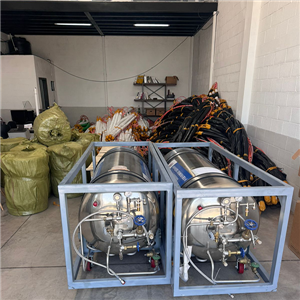
For projects requiring controlled excavation or low-vibration rock breaking, Gaea Rock’s O2 Gas Energy Rock Splitting System can also be considered as a complementary solution where conventional blasting or excessive drilling disturbance is undesirable.